


For years, ecommerce growth followed a simple formula. Spend more on ads. Acquire more customers. Scale revenue. That formula is breaking.
Across ecommerce, brands are facing rising CPMs, unstable ROAS, and increasing dependence on traffic they do not control. The issue is no longer whether ads work. The issue is that ads alone no longer compound.
This shift is driving renewed focus on email, SMS, and customer data platforms like Klaviyo, where growth is built on retention rather than constant acquisition.
The End of Cheap Traffic
Paid media is not broken, but it is no longer forgiving.
Platforms have matured. Competition has increased. Algorithms now favor consistency, brand signals, and first-party data.
For many ecommerce brands, the symptoms are familiar:
- CPMs climb year over year
- Performance fluctuates unpredictably
- Scaling spend produces diminishing returns
When traffic was cheap, inefficiencies were survivable. Today, they are exposed immediately.
Relying exclusively on ads turns growth into a treadmill. The moment spend slows, revenue drops. There is no compounding effect.
Why Ad-Only Growth Eventually Plateaus
Ad-driven growth has a ceiling because it is transactional.
Each conversion is treated as an isolated event. Once the purchase is complete, the relationship often resets.
This creates three structural problems.
First, acquisition costs rise faster than customer lifetime value if retention is weak.
Second, brands become vulnerable to platform changes they cannot control.
Third, customer knowledge remains fragmented across tools and channels.
As a result, even strong brands experience growth plateaus. They acquire customers efficiently but fail to turn those customers into repeat buyers.
Retention is not a nice-to-have at scale. It is the mechanism that sustains growth.
What “Owned Marketing” Actually Means
Owned marketing is often misunderstood.
It does not simply mean sending newsletters or promotional texts.
Owned marketing means controlling the relationship, the data, and the communication channel between your brand and your customer.
Email lists and SMS subscribers are not just audiences. They are assets.
Unlike paid traffic, these assets compound over time:
- Each purchase adds context
- Each interaction improves relevance
- Each message strengthens familiarity
When brands own customer relationships, growth becomes cumulative rather than linear.

Retention as a Revenue Multiplier
Retention is often framed as a cost-saving tactic.
In reality, it is a revenue multiplier.
Returning customers convert at higher rates, spend more per order, and require less incentive to buy again.
Even small improvements in repeat purchase rate can dramatically change unit economics.
Retention also stabilizes revenue. Instead of relying on constant top-of-funnel pressure, brands benefit from predictable lifecycle-driven sales.
This is where owned marketing channels become strategic rather than tactical.
Turning Customer Data Into Repeat Revenue
Data alone does not create retention.
Actionable data does.
Modern ecommerce brands collect vast amounts of customer information, but without unification, that data remains underutilized.
Purchase history, browsing behavior, engagement signals, and support interactions all tell a story. The challenge is connecting them.
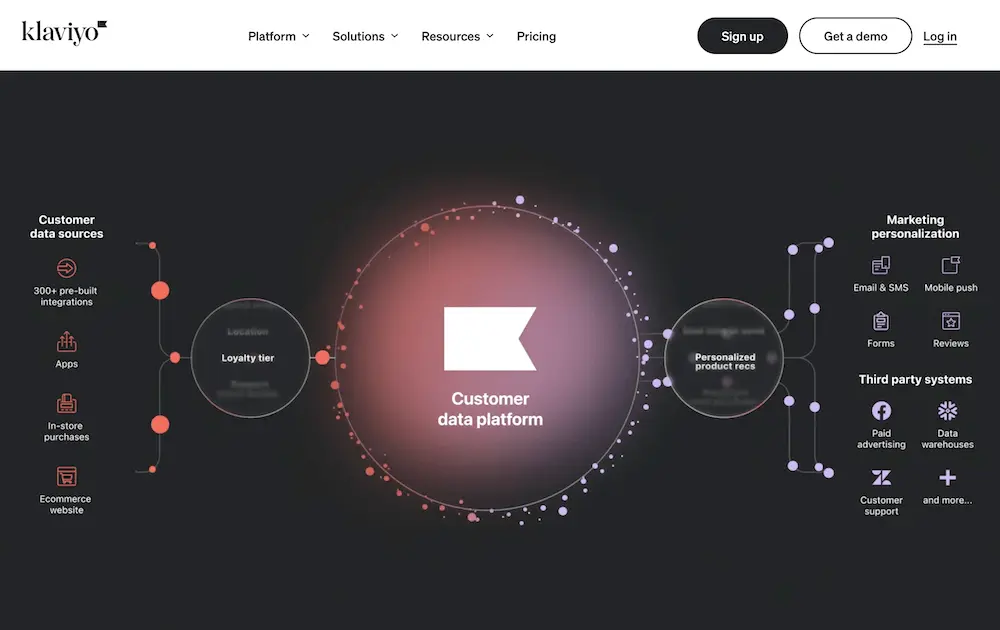
Platforms like Klaviyo are built to unify these signals into a single customer profile.
When data is unified, brands can:
- Personalize messaging beyond basic segmentation
- Trigger communications based on real behavior
- Adapt lifecycle flows dynamically
This turns marketing from broadcasting into conversation.

Email and SMS as a Retention Engine
Email and SMS are often treated as separate tools.
In reality, they work best as a coordinated system.
Email excels at depth. It provides space for storytelling, education, and long-form value.
SMS excels at immediacy. It reaches customers in moments where timing matters.
Together, they support the entire customer lifecycle:
- Onboarding new buyers
- Re-engaging inactive customers
- Driving replenishment and upgrades
- Strengthening post-purchase trust
With automation, this system runs continuously, adapting to customer behavior without constant manual input.
Lifecycle Marketing Over Campaign-First Thinking
Many brands still rely heavily on one-off campaigns.
While campaigns have their place, they are not retention strategies.
Lifecycle marketing shifts the focus from what to send to when and why to send it.
Key lifecycle moments include:
- First purchase follow-up
- Second purchase encouragement
- Churn risk detection
- Loyalty reinforcement
Automation platforms like Klaviyo allow brands to design these flows once and improve them over time based on performance.
This is how retention becomes scalable.
Building Leverage With Owned Channels
The most important difference between paid and owned channels is leverage.
Paid ads require continuous input. Stop paying, and traffic disappears.
Owned channels appreciate in value.
As lists grow and data deepens, each message becomes more efficient. Revenue per send increases. Engagement improves. Dependence on paid acquisition decreases.
This does not mean abandoning ads.
It means using ads to feed an owned ecosystem instead of replacing one.
Why Ecommerce Brands Are Rebalancing Growth
The shift toward owned marketing is not ideological.
It is economic.
Brands that survive market volatility tend to share one trait: strong retention infrastructure.
They invest in systems that build memory, context, and trust with customers.
Email and SMS, powered by unified data, are no longer optional at scale. They are the foundation of resilient growth.
Final Thoughts
Ecommerce growth is no longer about chasing the next traffic source.
It is about building leverage.
Brands that own customer relationships can adapt, experiment, and scale with confidence.
Platforms like Klaviyo support this shift by turning customer data into retention-driven revenue.
In a landscape where attention is rented and loyalty is earned, owned marketing is not just safer.
It is smarter.
FAQ
Why can’t eCommerce brands rely only on ads?
Ads can drive traffic, but they do not build long-term customer relationships on their own. Without retention, brands stay dependent on constant acquisition spend.
What is owned marketing in eCommerce?
Owned marketing means building direct customer relationships through channels like email, SMS, and customer data instead of relying only on paid platforms.
How does Klaviyo support retention marketing?
Klaviyo helps brands unify customer data, segment audiences, and automate email and SMS flows based on behavior, purchase history, and lifecycle stage.
Why are email and SMS important for repeat revenue?
Email and SMS help brands stay connected after the first purchase, send timely follow-ups, encourage repeat orders, and build stronger customer loyalty.
Should brands stop using paid ads?
No. Paid ads can still drive acquisition, but they work better when they feed an owned marketing system that improves retention and lifetime value.
We only recommend tools we've tested and trust. This post may include affiliate links, meaning we may earn a commission if you choose to purchase - at no extra cost to you.


